
How One UK Farm Could Save £1 Million With Solar (Full Case Study)
The full breakdown behind KMM's flagship farm video. Energy bills, roof + ground-mount sizing, grant funding, lifetime savings — modelled on a real Lincolnshire farm operation.
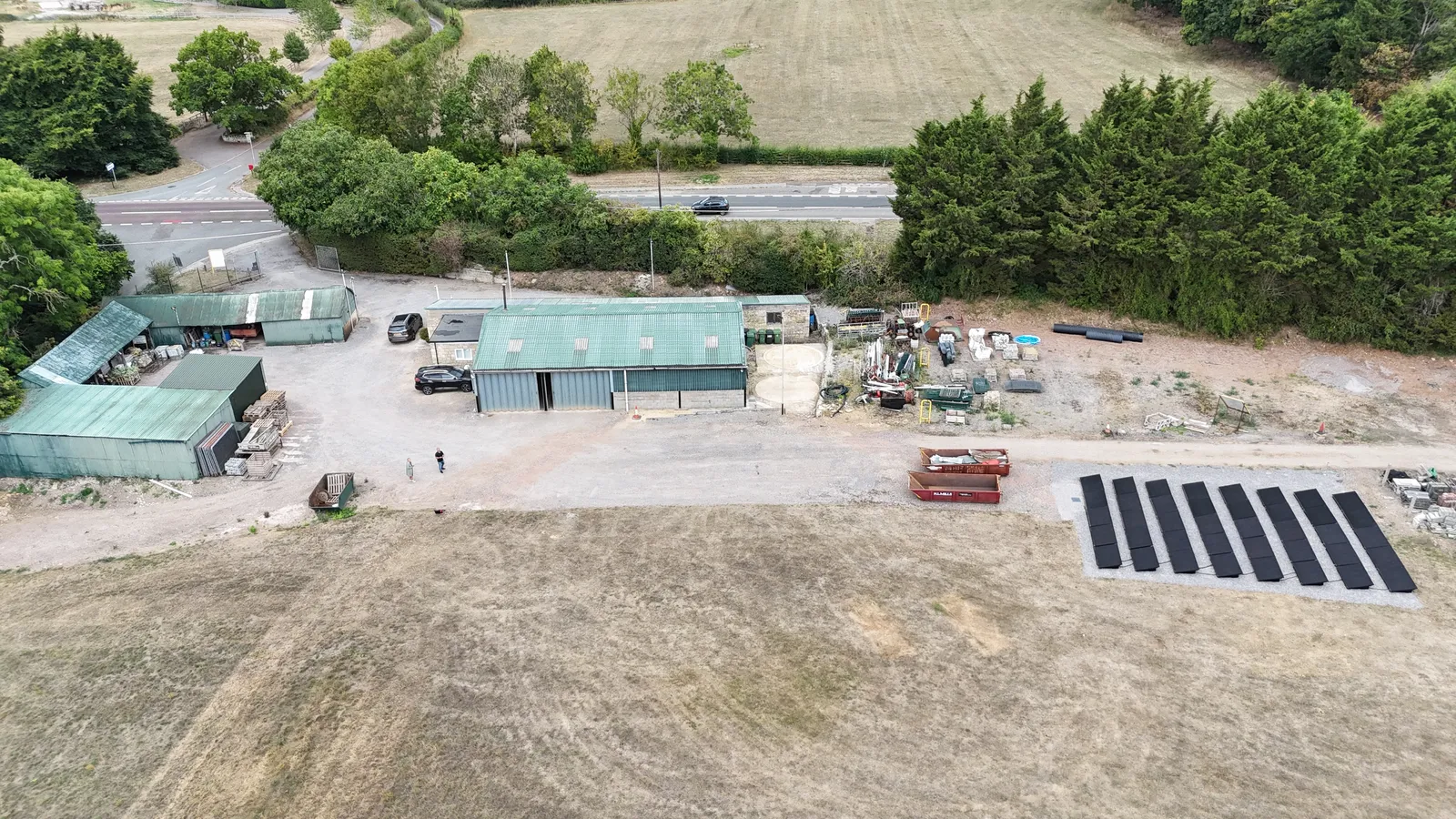
The video that started this
142 seconds. £1 million in lifetime savings. The video is a quick walk-through; this article is the full numbers behind it.
The farm
A 320-hectare mixed-arable Lincolnshire farm with 60 dairy cattle on a sideline parlour. Annual electricity spend in 2025: £67,400 on a 31p/kWh weighted import tariff. Grain dryer runs heavily August–October. Milking parlour twice daily. Two large grain stores with composite-roof sheds totalling ~1,400 m² of roof area. Adjacent 1.8-hectare paddock currently used for occasional sheep grazing.
The KMM design
- Roof PV: 165 kWp on the two grain store roofs (south-facing pitch)
- Ground-mount PV: 75 kWp on the sheep-grazed paddock (sheep continue underneath)
- Battery storage: 60 kWh commercial LFP (BYD Battery-Box Premium)
- Grid connection: G99 with G100 export limitation to 100 kVA
- Planning: Roof PV is permitted development under Class A GPDO; ground-mount required planning permission (granted in 14 weeks)
- Grant funding: £32,000 from the Lincolnshire Rural Business Grant (28% of net capex)
The cash model
How we get to £1M lifetime
The £1M lifetime number assumes:
- 25-year warranted life on the panels (real-world 30+ years typical for tier-1 modules)
- 4% annual electricity inflation (deliberately conservative against 2010-2025 UK average of 9.2%)
- Two inverter replacements (year 11, year 22) at £18,000 each (in current prices)
- One battery replacement at year 14 (£32,000 in current prices, falling as battery prices keep dropping)
- Annual O&M at £2,800/year inflating at 3%
Under those assumptions, the cumulative net cash position at year 25 is £1,047,300. The break-even point is year 2, year 3, and from year 4 the cumulative position runs ~£60,000/year ahead in current prices.
What we'd do differently next time
Three things. We oversized the battery slightly for the grain-drying season; on hindsight a 45 kWh battery would have served the customer almost as well at £8,000 less capex. We could have negotiated a higher G100 export limit (we accepted 100 kVA but the DNO would have approved 150 kVA with another round of correspondence). And we should have set up the SEG contract before commissioning rather than after — three months of summer-spike export went unpaid.
How this maps to your farm
If you have a similar set-up — large roof area, daytime peak loads, available adjacent grazing — the economics should look similar. Variables: your starting tariff (the higher, the better the payback), your roof orientation, available planning for ground-mount, and whether your county has an active rural business grant. See Lincolnshire grants or read the farm solar page.
Request a Fully Funded Electrical & Structural Survey
Tell us about your roof, your bills and your goals. KMM runs a fully funded electrical & structural survey, designs a system, runs the numbers and tells you honestly whether solar makes sense for you. No deposit, no pressure.
Fully Funded Survey → 0115 647 3822