
This UK Pub Cut Its Energy Bill by £500/Month With Solar (Real Case Study)
Real KMM pub solar install — bills, payback, install footprint and what makes hospitality solar different from any other commercial sector.
The £500/month video
A 100+ view real customer video that shows what happens when KMM installs solar on a UK pub. Pubs have a load shape unlike most commercial buildings — quiet daytime, heavy evening peak, refrigeration overlay, kitchen extract. The video makes the case in 53 seconds; the full numbers are below.
The pub
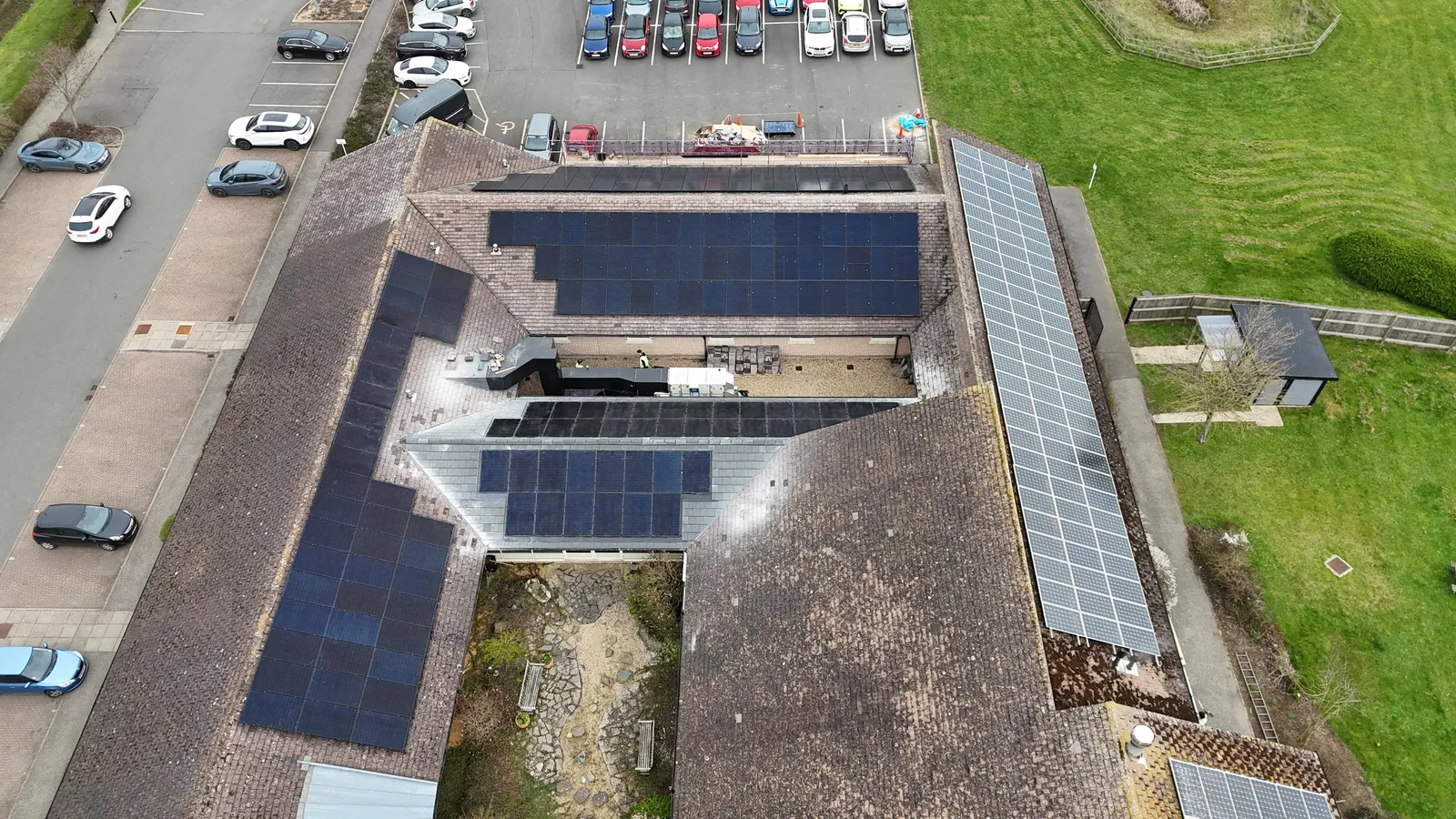
A traditional UK village pub across the UK — Grade II locally-listed but not nationally listed, large pitched slate roof with a south-facing back-of-house extension, beer cellar, commercial kitchen, two upstairs guest rooms (Bed & Breakfast operation), 60-cover restaurant, and a large beer garden. Pre-install annual electricity spend: £14,400 on a 31p/kWh commercial fixed-rate tariff.
The load shape
A pub's daily load profile is unlike a factory or office:
- 00:00-09:00: low-load — refrigeration only, ~3 kW
- 09:00-11:00: kitchen prep and cleaning, ~6 kW
- 11:00-14:00: lunch service peak, ~12-15 kW (kitchen + fryers + dishwasher)
- 14:00-17:00: quiet afternoon, ~4-6 kW
- 17:00-23:00: evening service peak, ~14-18 kW (the longest peak)
- 23:00-00:00: close-down and cleaning, ~5 kW
The lunch peak partly aligns with solar generation, but the evening service peak — when most kitchen and restaurant load happens — is well past solar generation. This is what makes pubs unusually good battery candidates.
The KMM design
- Solar PV: 22 kWp on the south-facing back-of-house roof (smaller system than a comparable office because the roof area is constrained by the listed status)
- Battery: 30 kWh LFP — sized specifically to bridge from end of solar generation (around 19:00 in summer) through to end of evening service (23:00)
- Tariff move: from 31p fixed to a commercial time-of-use product with 9p overnight charging window
- Grid: G99 fast-track, cleared in 7 weeks
- Listed-building consent: approved in 9 weeks (panels not visible from the front conservation elevation)
The numbers
Why pubs are unusual customers
Three things make pub solar economics different from other commercial sectors:
- Battery is mandatory. Without battery, self-consumption is around 35% on a pub roof (most generation happens during the quiet afternoon). With battery, that rises to 80%.
- Listed building / conservation area considerations — pubs are often in heritage settings. Plan for Listed Building Consent or planning permission, not the assumption of permitted development.
- Cellar refrigeration baseload — pubs have a 24-hour refrigeration overlay (beer cellar + kitchen fridges). This continuous load is what makes the daytime self-consumption float around 35% even without battery.
What other pub landlords should ask
Three questions to ask any commercial solar installer before signing:
- How are you sizing the battery? (If based on solar generation rather than evening peak load, get a second opinion)
- Have you checked listed-building consent / conservation area planning? (If they don't ask, they probably haven't checked)
- What's your G99 timeline assumption? (For 20-30 kWp pubs, expect 6-9 weeks — anything longer suggests the installer hasn't worked with your local DNO recently)
If you operate a pub or hospitality venue, our hospitality solar page covers the broader sector. For a direct quote on your specific site, book a fully funded survey.
Request a Fully Funded Electrical & Structural Survey
Tell us about your roof, your bills and your goals. KMM runs a fully funded electrical & structural survey, designs a system, runs the numbers and tells you honestly whether solar makes sense for you. No deposit, no pressure.
Fully Funded Survey → 0115 647 3822