
No Sun Today, Yet Solar Still Producing Power — How UK Solar Performs in Bad Weather
The KMM short that surprised 960+ viewers — solar generating in overcast UK conditions. The science behind why, and what it means for your modelled payback.
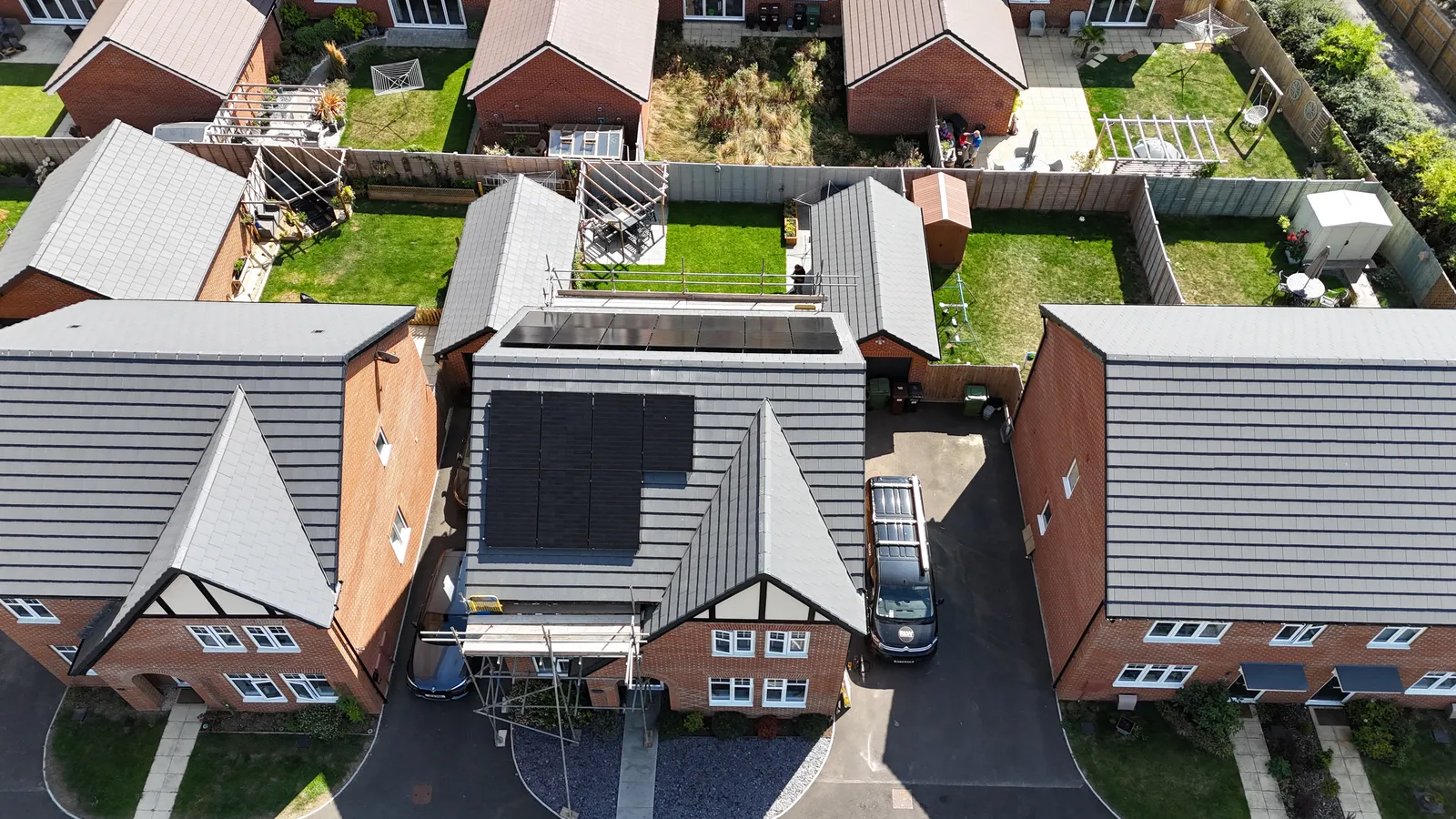
The "no sun" question
The single most common objection KMM hears from UK prospects is "but there's no sun in this country." It's understandable but wrong, and the short below — viewed nearly 1,000 times in a few weeks — shows the proof at the inverter monitoring app.
The science: solar panels work in diffuse light
Solar PV panels generate electricity from photons. Direct sunlight provides the most photons per square metre per second (about 1,000 W/m² at midday in summer). But diffuse light — the scattered photons that make a UK overcast sky bright enough to see — also reaches the panel. A typical UK overcast day at midday delivers around 150-250 W/m², or 15-25% of clear-sky intensity. That's enough for a typical 4kWp domestic system to generate 1-2 kW continuously through the day.
The UK weather data
Solar industry standard is to model UK generation against PVGIS (the EU's Photovoltaic Geographical Information System), which uses 10+ years of satellite-measured solar irradiance for every postcode in Europe. For the United Kingdom, PVGIS data tells us:
| Month | Avg daily generation per kWp | % of peak month |
|---|---|---|
| January | 0.9 kWh/kWp/day | 22% |
| April | 3.4 kWh/kWp/day | 82% |
| July (peak) | 4.1 kWh/kWp/day | 100% |
| October | 1.8 kWh/kWp/day | 44% |
| Annual average | 2.4 kWh/kWp/day | ~870 kWh/kWp/yr |
Every KMM payback calculation uses this 870 kWh/kWp/year figure (or the postcode-specific equivalent), not an optimistic summer-day projection. So when "no sun" days happen — which they will, often — your modelled payback already includes them.
What KMM hardware does in low light
Three things help diffuse-light performance:
- Half-cut panel technology — most tier-1 panels in 2026 are half-cut, meaning each cell is split into two electrically. This improves low-light performance by 2-3% versus older full-cell panels.
- Bypass diodes — internal panel diodes route around shaded or partial-light cells, preventing one weak cell dragging down the whole string.
- Optimisers (Tigo, SolarEdge) — on commercial roofs with mixed shading, panel-level optimisers extract the maximum from each panel independently. Adds 6-8% to generation on shaded roofs.
The flip: what "no sun" actually means
UK overcast days don't mean zero generation. They mean ~25% of peak generation. Across a calendar year, the UK averages around 60% of theoretical clear-sky generation — which is what PVGIS models and what KMM's payback assumptions already use. There is no scenario in which you install solar in the UK and discover the system underperforms because of weather, provided the installer modelled with PVGIS rather than manufacturer test-condition (STC) numbers.
What this means for your quote
Ask any installer: "Are your generation numbers based on PVGIS or panel STC ratings?" If the answer is STC, recalculate at 80% of that figure to get the realistic generation. If the answer is PVGIS (or "Helios 3D" or "Solargis"), the numbers are already realistic.
For a quote where every assumption is disclosed — including the exact PVGIS dataset used for your postcode — book a free KMM survey.
Request a Fully Funded Electrical & Structural Survey
Tell us about your roof, your bills and your goals. KMM runs a fully funded electrical & structural survey, designs a system, runs the numbers and tells you honestly whether solar makes sense for you. No deposit, no pressure.
Fully Funded Survey → 0115 647 3822