
Do Commercial Solar Panels Need Planning Permission? (2026 Guide)
Rooftop solar on a business building in England is usually permitted development under Class J. Here are the limits, the prior-approval step above 50 kW, and the cases that still need a full planning application.
The short answer
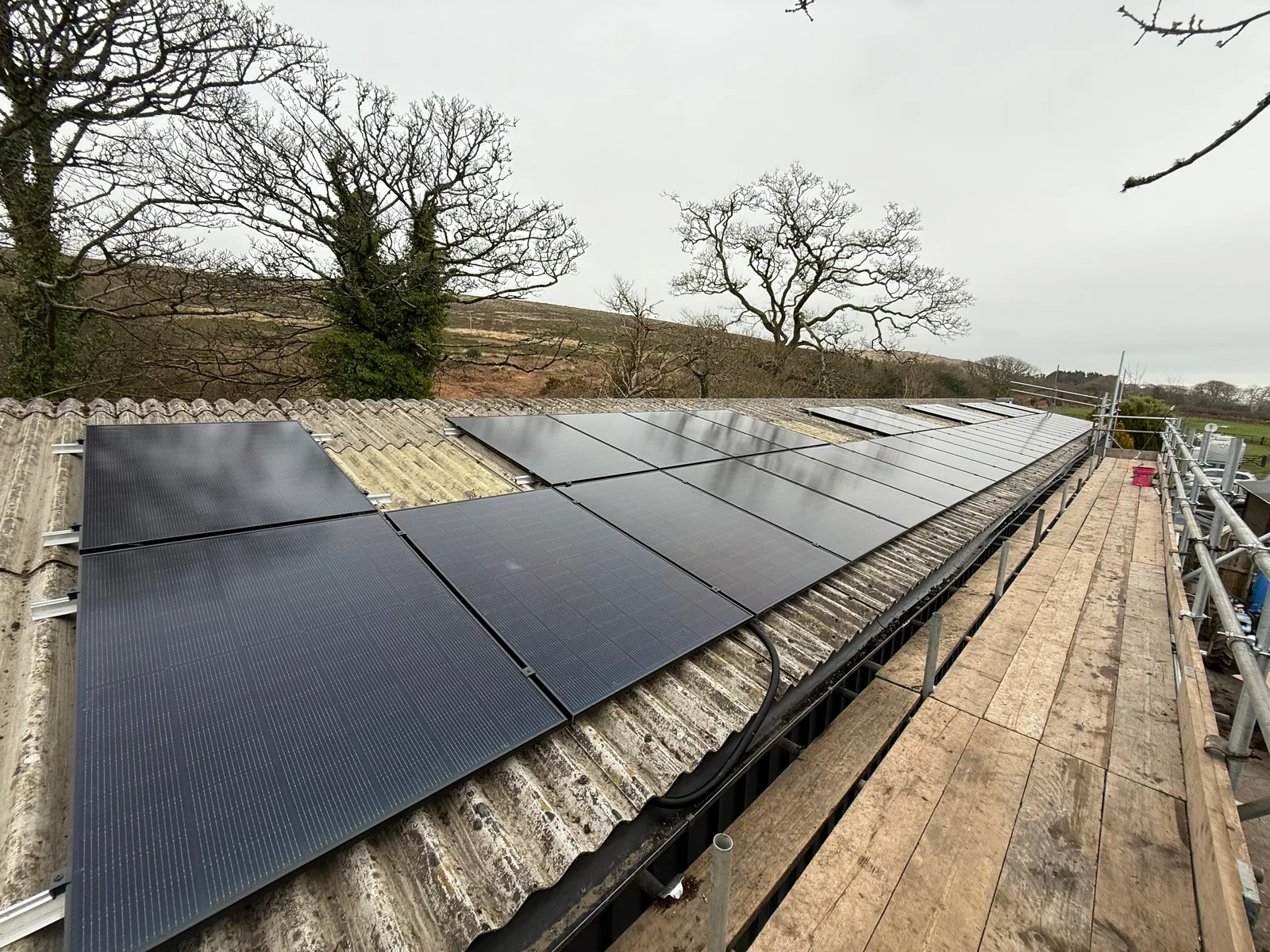
Usually not. In England, solar panels on the roof of a non-domestic building, such as a warehouse, factory, office, shop, school, hotel or farm shed, are permitted development under Class J of Part 14 of the General Permitted Development Order 2015. Within the size and position limits below, they need no planning application. Systems above 50 kW add one step: the council's prior-approval decision on design and appearance. Listed buildings and scheduled monuments are the main cases that still need a full application, and ground-mounted arrays sit outside Class J altogether.
Which planning rules apply to a business roof
The householder rules are for houses and blocks of flats, and they sit in a different class of Part 14. Any other building, whether a hotel, office, warehouse, factory, school, shop or farm building, falls under Class J. Class J covers three things: solar thermal on a building, solar PV on a building up to 50 kW, which is the legal meaning of microgeneration under the Energy Act 2004, and other solar PV above 50 kW on a roof. The first two are permitted development within the limits. The third is permitted development too, but only after the council's prior-approval decision.
That split matters because commercial projects are often quoted against the wrong rules. A guide written for homeowners will talk about the householder limits; none of that decides what can go on a warehouse roof.
The limits on the roof
Under Class J the panels are not permitted development if they:
- protrude more than 0.2 m beyond the plane of a pitched roof slope;
- sit more than 1 m above the highest part of a flat roof, not counting any chimney;
- are within 1 m of the external edge of the roof;
- are on a scheduled monument; or
- are on a listed building, or on a building within its curtilage.
The 1 m edge gap matters most on flat-roofed units, where it trims the usable area around the parapet. The panels must also be sited, as far as practicable, to minimise their effect on the appearance of the building and the amenity of the area, and removed once they are no longer needed.
Above 50 kW: the council's prior-approval decision
Above 50 kW, Class J still applies, but the work needs the council's prior-approval decision on the design and external appearance of the panels, including the effect of glare on neighbouring land, before it starts. It is a narrower question than a full planning application: the council looks at how the array will look and whether glare will affect neighbours. Most commercial roofs are above 50 kW, so plan the prior-approval step into the programme alongside the grid application.
The 1 MW cap that used to apply to rooftop solar on non-domestic buildings was removed on 21 December 2023, so a large roof is no longer pushed into a full planning application by its size alone.
Conservation areas, National Landscapes and the Broads
A conservation area does not remove Class J for a roof. The extra restriction on what the order calls article 2(3) land, which covers conservation areas, World Heritage Sites, National Parks, National Landscapes and the Broads, applies to panels on walls that front a highway, not to panels on the roof. Wall-mounted panels anywhere must also sit no more than 0.2 m proud and at least 1 m from a junction with another wall or the roof.
When you need full planning permission
Three cases come up most often. A listed building, or a building within its curtilage, needs planning permission and listed building consent. A scheduled monument is outside Class J. And anything that breaks the limits above, such as panels standing more than 1 m above a flat roof, needs an application.
Ground-mounted arrays are a separate matter, because Class J only covers panels on a building. A field or yard array is a conversation with the council before it is designed, not after.
Planning routes compared
| Your project | Planning route | What the council decides |
|---|---|---|
| PV up to 50 kW on a business roof, within the limits | Permitted development, Class J | Nothing: no application |
| PV above 50 kW on a business roof, within the limits | Permitted development, Class J, with prior approval | Design and appearance, including glare |
| Solar on a house or block of flats | Householder rules (a different class of Part 14) | Nothing, within that class's limits |
| Panels on a listed building or within its curtilage | Planning permission and listed building consent | The whole proposal |
| Panels outside the Class J limits | Planning permission | The whole proposal |
| Ground-mounted array | Outside Class J | Ask the council before design |
Wales and Scotland
Everything above is the law in England. Planning is devolved, so Wales and Scotland have their own rules for solar on non-domestic buildings. Check the Welsh or Scottish rules before relying on any of this for a site outside England.
The other approvals that sit beside planning
Planning is one of several approvals. A system above 16 A per phase, about 3.68 kW single-phase or 11 kW three-phase, needs a G99 application and the network operator's approval before it connects, and the operator's offer sets how much the system may export. Our G99 application guide walks through that process, and our grid connections page explains how it fits into a KMM installation.
If you lease the building, check what the lease says about roof works before a design is commissioned. Once the system is running, onsite solar and batteries are exempt from business-rates valuation in England until 31 March 2035.
What the roof survey settles
Most of the Class J limits are measurements: the height above a flat roof, the gap to the edge, how far the panels stand off a pitched slope. A drone survey measures the roof, the plant on it and the parapets, so the layout can be drawn inside the limits from the start, and the system size, and with it the 50 kW question, is known before any application is needed. Our commercial solar service starts with that survey.
Planning in practice: Milton Keynes, Reading and Norwich
The rules are national, but the council that makes any decision is local, and it is not always the one in the town's name. Milton Keynes City Council is a unitary authority covering the whole borough; our page on commercial solar panel installation in Milton Keynes sets out the local figures. Around Reading, a site at Theale falls to West Berkshire Council rather than Reading Borough Council, as our page on solar panel installation in Reading explains. Near Norwich, Hellesdon sits in Broadland and Norwich Research Park at Colney in South Norfolk; see our Norwich solar installation page.
Frequently asked questions
Sources: GPDO 2015, Schedule 2, Part 14, Class J (revised text, including S.I. 2023/1279); S.I. 2022/405 (plant and machinery); Energy Networks Association: G98 / G99.
Watch related KMM videos
Real KMM customers and projects on this topic — short, no-fluff videos.


Request a Fully Funded Electrical & Structural Survey
Tell us about your roof, your bills and your goals. KMM runs a fully funded electrical & structural survey, designs a system, runs the numbers and tells you honestly whether solar makes sense for you. No deposit, no pressure.
Fully Funded Survey → Call 0115 647 3822